

Every commercial kitchen in the Kingdom runs on stainless steel: worktables, sinks, shelving, hoods and service counters. But not all stainless steel is the same. The grade you choose decides how your equipment handles heat, water, cleaning chemicals and years of daily use. The two grades you will meet most often are AISI 304 and AISI 430. Here is how they differ, and where each one belongs in your kitchen.
What makes AISI 304 different
AISI 304 is an austenitic stainless steel with roughly 18% chromium and 8% nickel. The nickel is what gives it its high resistance to corrosion, acids and salty or wet environments. It is non-magnetic, easy to clean and keeps its finish under heavy daily washing.
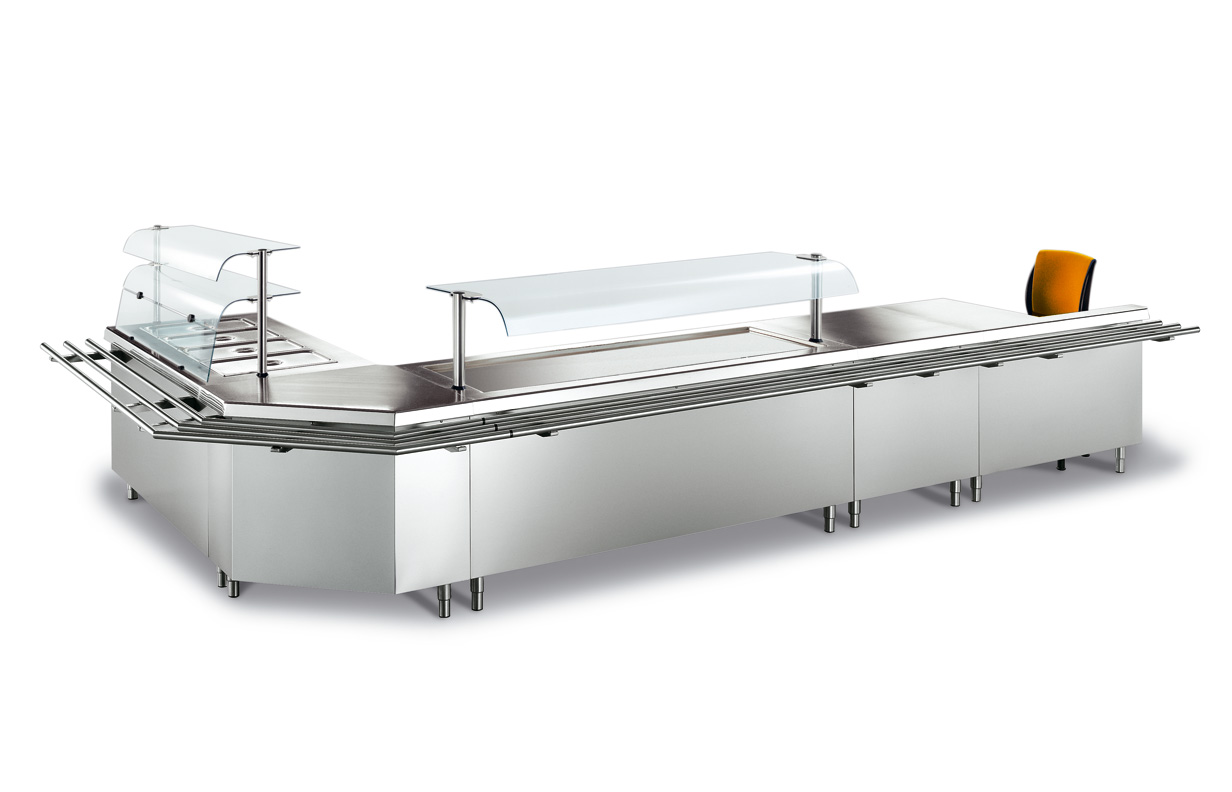
That is why 304 is the standard choice for food-contact surfaces and wet areas: preparation tables, sinks, dishwashing zones, cold rooms and anything that is cleaned with water and detergents several times a day.
Where AISI 430 makes sense
AISI 430 is a ferritic stainless steel. It contains chromium but almost no nickel, so it is magnetic, lighter on the budget and less resistant to corrosion. In a dry, well-ventilated area it performs well for years.
It is a sensible option for dry storage shelving, wall cladding, back panels and decorative parts that are not in direct contact with food or constant water. Using 430 in these places can reduce project cost without affecting hygiene.
“The right grade in the right place: 304 where there is food and water, 430 where it stays dry. That simple rule protects your investment for years.”
Thickness and finish matter too
Grade is only half of the story. Sheet thickness decides how rigid a table top is and how well it resists dents, and the surface finish affects how easily the equipment is cleaned. For heavy-duty preparation areas, a thicker 304 sheet with reinforced under-structure is usually the right choice.
At Tunisteel we fabricate kitchen equipment in both grades and help you specify the right material, thickness and finish for each zone of your project. Request a quote and our team will review your layout with you.


What do you think?
The cantilevered and stepped massing plays into the building’s sustainability benefits, as it forms balconies and green roofs that allow occupants fresh air and stunning views of the city.